Thinking About an Adjustable-Rate Mortgage? Here’s What You Need To Know.
If you’ve been looking for a home lately, you’ve probably felt how tough affordability still is. And that's exactly why more buyers are opting foradjustable-rate mortgages, or ARMs.
Here's what you need to understand about how they work, and whether they make sense for you.
What Is an Adjustable-Rate Mortgage?
Since a lot of people aren’t familiar with this type of loan, let’s start with a definition.This is howBusiness Insiderexplains the main difference between a fixed-rate mortgage and an adjustable-rate mortgage:
“With a fixed-rate mortgage, your interest rate remains the same for the entire time you have the loan. This keeps your monthly payment the same for years . . .adjustable-rate mortgages work differently. You’ll start off with the same rate for a few years, but after that, your rate can change periodically. This means that if average rates have gone up, your mortgage payment will increase. If they’ve gone down, your payment will decrease.”
Basically, one doesn’t change much over the life of your loan.
And one could change... either by a little, or a lot.
Of course, things like taxes orhomeowner’s insurancecan still have an impact on a fixed-rate loan, but the baseline of your mortgage payment is fairly steady. But the big difference is that with an ARM, your monthly paymentcouldchange over time.
Why Adjustable-Rate Mortgages Are Getting More Attention
So, why do some buyers choose this option? It's simple. It’s because of the upfront savings.Business Insiderexplains it like this:
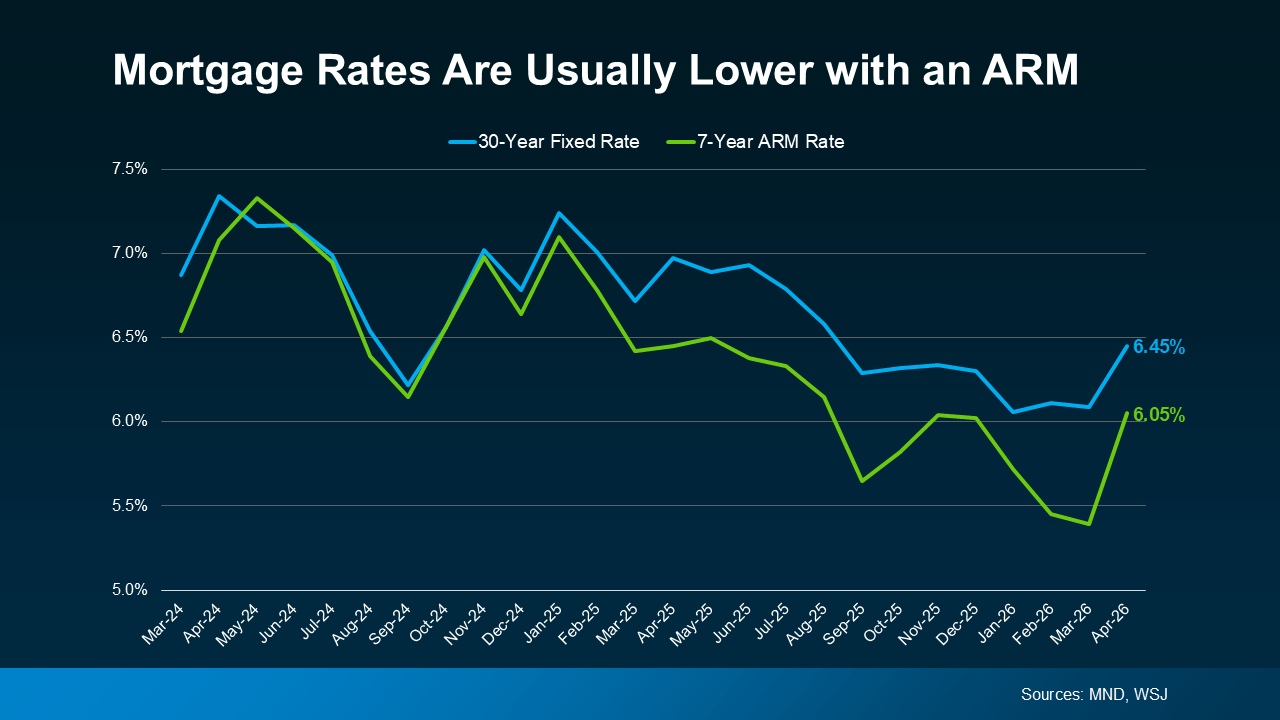
“Because ARM rates are typically lower than fixed mortgage rates, they can help buyers find affordability when rates are high.With a lower ARM rate, you can get a smaller monthly payment or afford more house than you could with a fixed-rate loan.”
And right now, according toMortgage News Dailyand theWall Street Journal, the upfront rate on an ARM is lower than a 30-year fixed mortgage (see graph below):